
Pre-IPO investing means buying equity in a private company before it lists on a public stock exchange, at a valuation set before public markets have their say. The draw is simple: the chance to own a stake at an earlier, potentially lower price than the eventual listing. The trade-off is real, though. These shares are hard to sell, valuations can be opaque, and not every private company reaches an IPO. This guide explains what pre-IPO investing is, how it works, who can take part, and how to weigh the risks honestly.
What is pre-IPO investing?
Pre-IPO investing is the practice of acquiring shares in a private company before it becomes publicly traded. “IPO” stands for initial public offering, the moment a company first sells stock to the general public on an exchange. Buying in before that event is what makes an investment “pre-IPO.”
It helps to separate two terms that often get blurred. The concept is pre-IPO investing: owning private company equity ahead of a listing. The mechanism is frequently a pre-IPO placement, a specific fundraising method where a company sells unregistered shares to a select group of investors before going public. Not all pre-IPO investing runs through a formal placement, but placements are one of the most common routes. The key idea stays the same: you are buying into a company while it is still private, betting its value will climb by the time it lists or is acquired.
How does pre-IPO investing work?
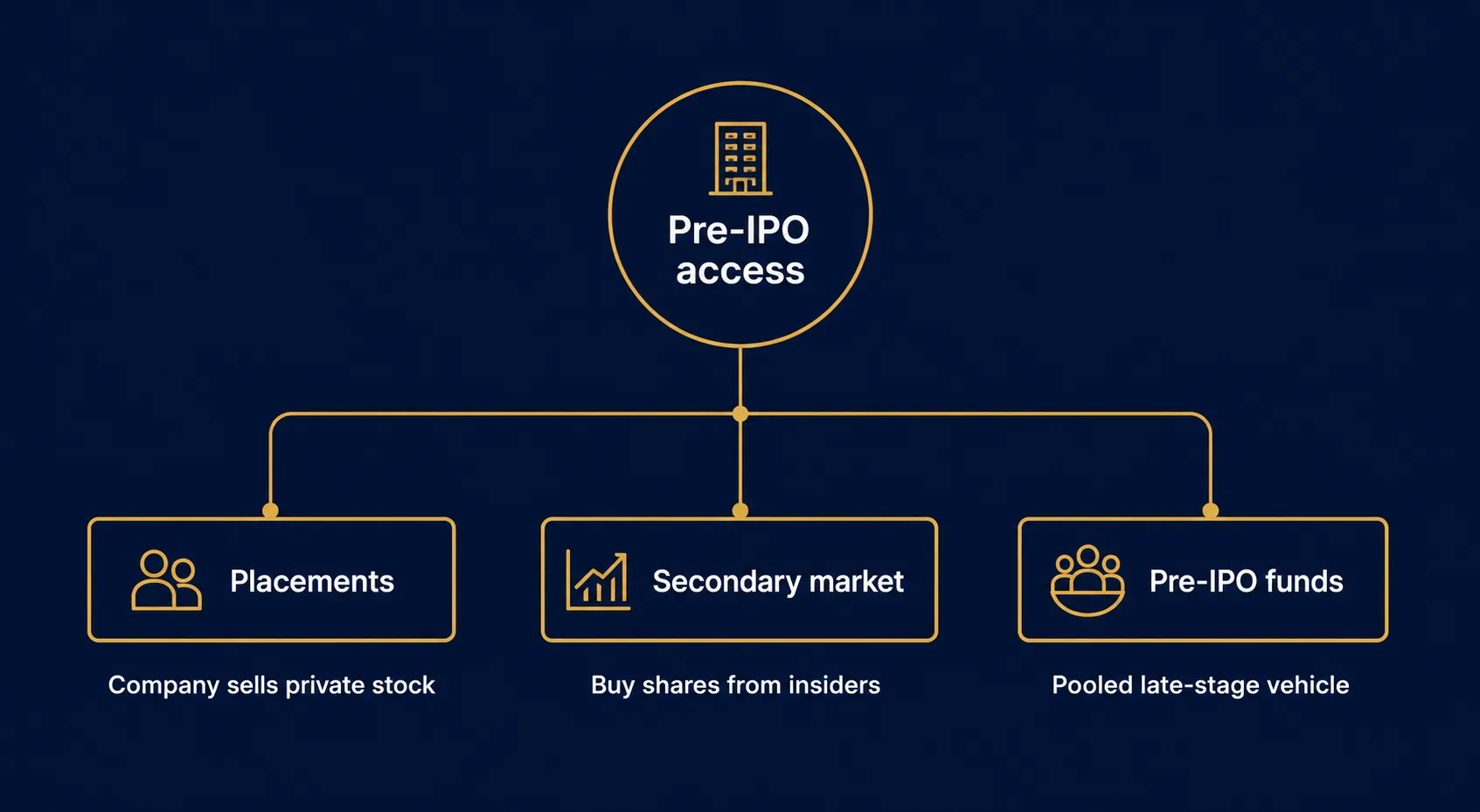
There are three main ways investors gain pre-IPO exposure, and they work quite differently.
Pre-IPO placements
In a placement, the company itself raises capital by selling private stock, often at a discount to the expected IPO price, to institutional investors and high-net-worth individuals. The discount compensates buyers for taking on risk and illiquidity. Placements often carry lock-up conditions that restrict when shares can be sold. These shares are typically unregistered and restricted, which the U.S. Securities and Exchange Commission covers in its investor guidance “Risky Business: Pre-IPO Investing”, meaning they cannot be freely traded like public stock.
Secondary market transactions
Here you are not buying newly issued shares from the company. Instead, you buy existing shares from early employees, founders, or early investors who want liquidity before an IPO. Pre-IPO marketplaces and platforms connect these sellers with buyers, handling paperwork, transfer approvals, and settlement. This is a growing part of the private market, but transfers usually still require company consent.
Pre-IPO funds
A pre-IPO fund is a pooled vehicle that invests across multiple late-stage private companies. Rather than concentrating your money in one name, a fund spreads it, which lowers single-company risk. In exchange, you pay management fees and often a share of profits (carry), and you hand stock selection to the fund manager.
| Route | Where the shares come from | Key trade-off |
|---|---|---|
| Pre-IPO placements | Newly issued private stock sold by the company, often at a discount to the expected IPO price | Lock-up conditions; shares are typically unregistered and restricted |
| Secondary market transactions | Existing shares from early employees, founders, or early investors seeking liquidity | Transfers usually still require company consent |
| Pre-IPO funds | A pooled vehicle holding multiple late-stage private companies | Management fees and carry; stock selection is handed to the fund manager |
Who can invest in pre-IPO shares?
Most pre-IPO opportunities are limited to accredited investors. Accreditation is based on income or net worth thresholds set by regulators, and the standard exists to ensure participants can absorb the higher risk and reduced disclosure of private offerings. The SEC’s Investor.gov resource on pre-IPO offerings also warns that this space attracts fraud, so verifying who you are dealing with matters as much as the deal itself.
Pre-IPO investing for non-accredited investors
Many guides stop at “accredited investors only.” The reality is more nuanced. Non-accredited investors do have limited routes: certain regulated funds, some equity crowdfunding platforms, and offerings made under exemptions such as Regulation A+ can open pre-IPO-style exposure to a wider audience. These options come with real constraints, including lower investment caps, fewer available deals, and often less access to premium late-stage names. If you are not accredited, the honest answer is that participation is possible but narrower, and the quality of what you can reach varies widely. Treat any offer promising easy access to a household-name private company with particular caution.
Pre-IPO minimum investment: what to expect
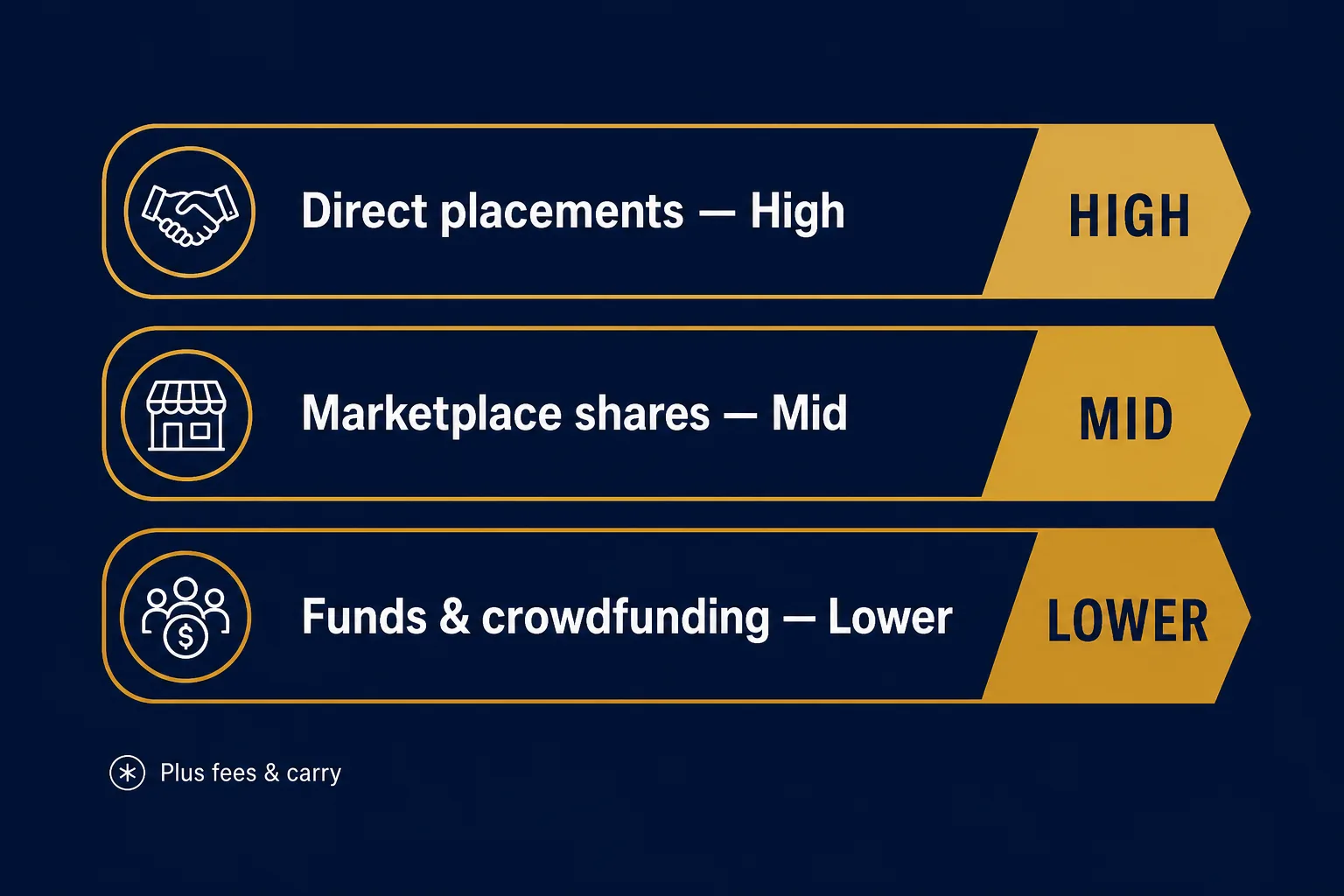
Minimums depend heavily on the route. Direct placements arranged through private networks or advisers tend to carry high minimums, because companies and intermediaries prefer fewer, larger checks. Some platforms and funds lower the entry point considerably by pooling many investors, which is part of their appeal. Rather than a single number, think in tiers: direct deals sit at the high end, while certain funds and marketplace allocations are more accessible.
Also factor in costs beyond the ticket size. Funds charge management fees and carry, platforms may add transaction fees, and these expenses affect your real entry cost and net return. The vehicle you choose changes both the minimum and the fee load.
How to invest in pre-IPO shares
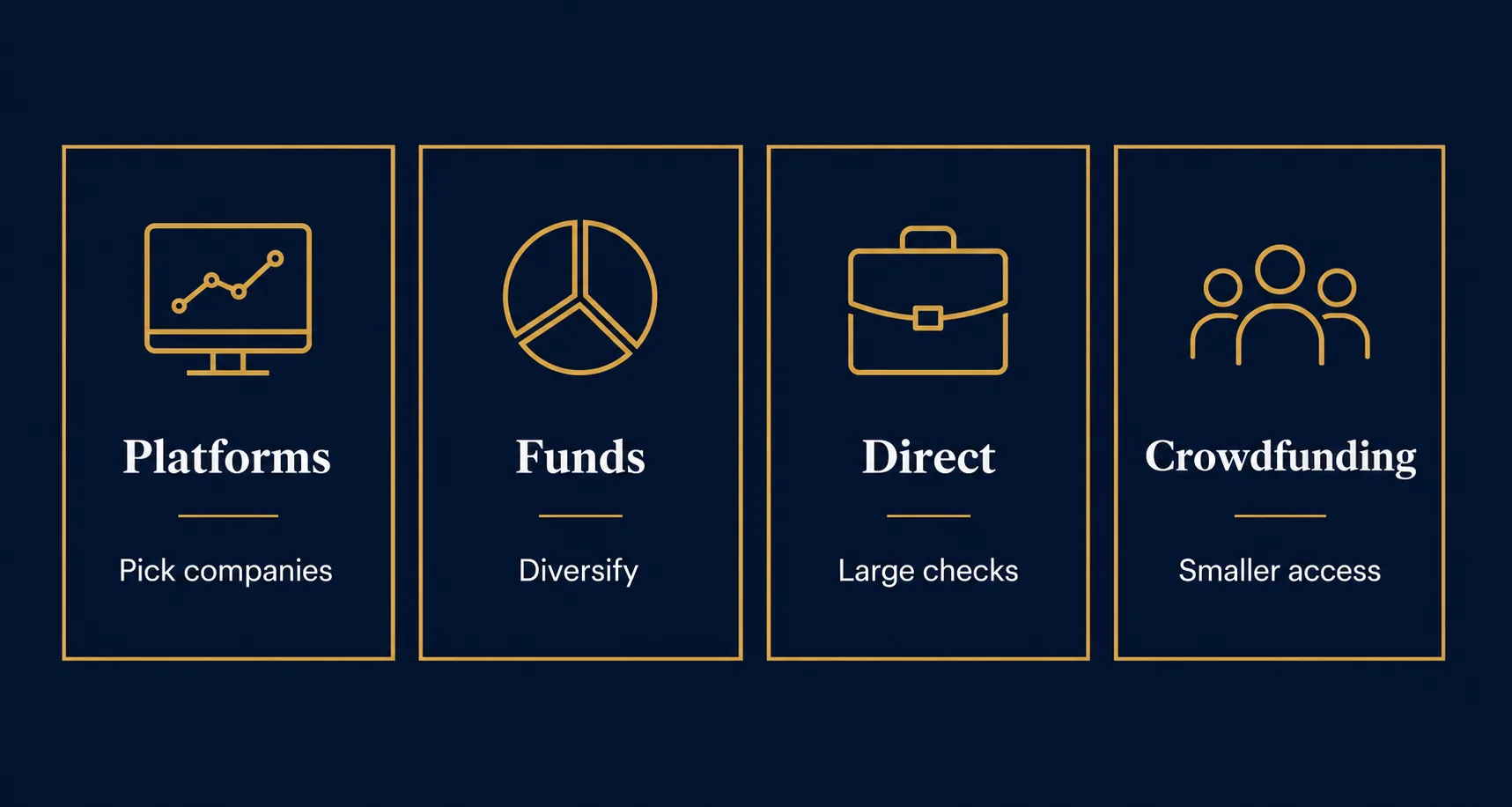
A simple way to decide is to match the route to your situation:
- Pre-IPO platforms and marketplaces suit investors who want to browse specific companies and buy secondary shares.
- Pre-IPO funds suit those who prefer diversification and professional selection over picking single names.
- Direct placements via private networks or advisers suit larger, well-connected investors comfortable with high minimums.
- Equity crowdfunding can suit smaller or non-accredited investors willing to accept narrower choice.
When evaluating any platform or fund, the goal is not to chase a “best” brand but to assess fit and quality. Look at how it sources deals, its fee structure, whether it verifies the shares it lists, and how it handles transfers and custody. On the underlying company, do your homework: review financials, understand the cap table, ask how the valuation was set, read the lock-up terms, and think through the likely exit path. A credible platform will make this information available rather than lean on the excitement of a well-known name.
The risks of pre-IPO investing
Pre-IPO investing carries risks that are easy to underestimate when the potential upside dominates the conversation.
- Illiquidity and lock-ups: your capital can be tied up for years, with no guarantee of a buyer.
- Valuation opacity: private valuations rely on limited disclosure and can be generous.
- Dilution: later funding rounds can reduce your ownership percentage.
- Deal-failure risk: the company may never go public or may be acquired at a disappointing price.
- Information asymmetry: insiders usually know far more than outside buyers.
There is also a hype risk worth taking seriously. Research on pre-IPO analyst coverage has found that affiliated analysts can inflate expectations rather than provide neutral information. A study in the Journal of Corporate Finance on pre-IPO hype by affiliated analysts documents these motives and their consequences, and work by Jay Ritter and colleagues at the University of Florida on pre-IPO analyst coverage examines whether such coverage reflects real information or promotion. Alongside hype, outright fraud is a documented problem, which is why the SEC’s Investor.gov warning on pre-IPO investment scams is essential reading before you commit funds.
If someone guarantees a specific company’s IPO or promises risk-free returns, treat it as a red flag.
Lock-ups, selling, and holding periods
One of the most common points of confusion is how long your money stays committed and whether you can get out.
How long do you have to hold pre-IPO shares?
There are two holding periods to understand. Before an IPO, your shares can be locked for years while the company matures toward an exit. After a company goes public, a post-IPO lock-up (commonly around 90 to 180 days, though it varies by deal and contract) may still prevent you from selling. The exact terms are set in your agreement, so read them carefully.
Can I sell my pre-IPO shares?
Sometimes, but not freely. Secondary markets exist for private shares, yet transfers are often restricted. Companies frequently hold a right of first refusal, meaning they can buy the shares before an outside buyer does, and many agreements require company approval for any sale. In practice, selling before an IPO can be slow, may require a discount, and is not guaranteed.
Is pre-IPO investing a good idea?
The balanced answer is that pre-IPO investing can offer outsized returns, but it concentrates risk, ties up capital, and carries a genuine chance of loss. Whether it suits you depends on your portfolio size, time horizon, tolerance for illiquidity, and access to quality deals. For most investors it works best as a small, deliberate slice of a broader portfolio rather than a core holding.
As for “what is the best pre-IPO stock to buy,” no one can name a guaranteed winner in advance. Anyone who claims otherwise is selling something. A more useful question is how to evaluate opportunities and diversify across several, so one disappointment does not sink your allocation.
Frequently asked questions
Is investing in pre-IPO a good idea?
How long do you have to hold pre-IPO shares?
Can I sell my pre-IPO shares?
What is the best pre-IPO stock to buy?
Can non-accredited investors buy pre-IPO shares?
What’s the minimum to invest in pre-IPO?
Bringing it together
Pre-IPO investing is best understood as one considered component of a private-markets allocation, not a shortcut to guaranteed gains. Investors who do well approach it with the same discipline they apply everywhere: they verify who they are dealing with, read the terms, diversify, and size positions sensibly. For those exploring curated private investment opportunities, the real value lies in vetted access and thorough diligence, which is what turns a speculative idea into a considered decision.