
Quick take: SEIS vs EIS
SEIS and EIS are not rivals. They are two rungs of the same ladder. HMRC’s venture capital schemes exist to push private money toward small, unquoted British companies that banks and public markets will not fund, and to pay the investor back for that risk in tax relief.
The Seed Enterprise Investment Scheme sits at the bottom of the ladder, aimed at companies barely trading. The Enterprise Investment Scheme sits above it, aimed at companies with a product, customers and a reason to scale. SEIS is more generous to the investor and stricter on the company. EIS is the reverse.
If you are working out how to invest in private companies in the UK, or you are a founder choosing which scheme to apply for, the differences below are the ones that change the answer.
SEIS vs EIS at a glance
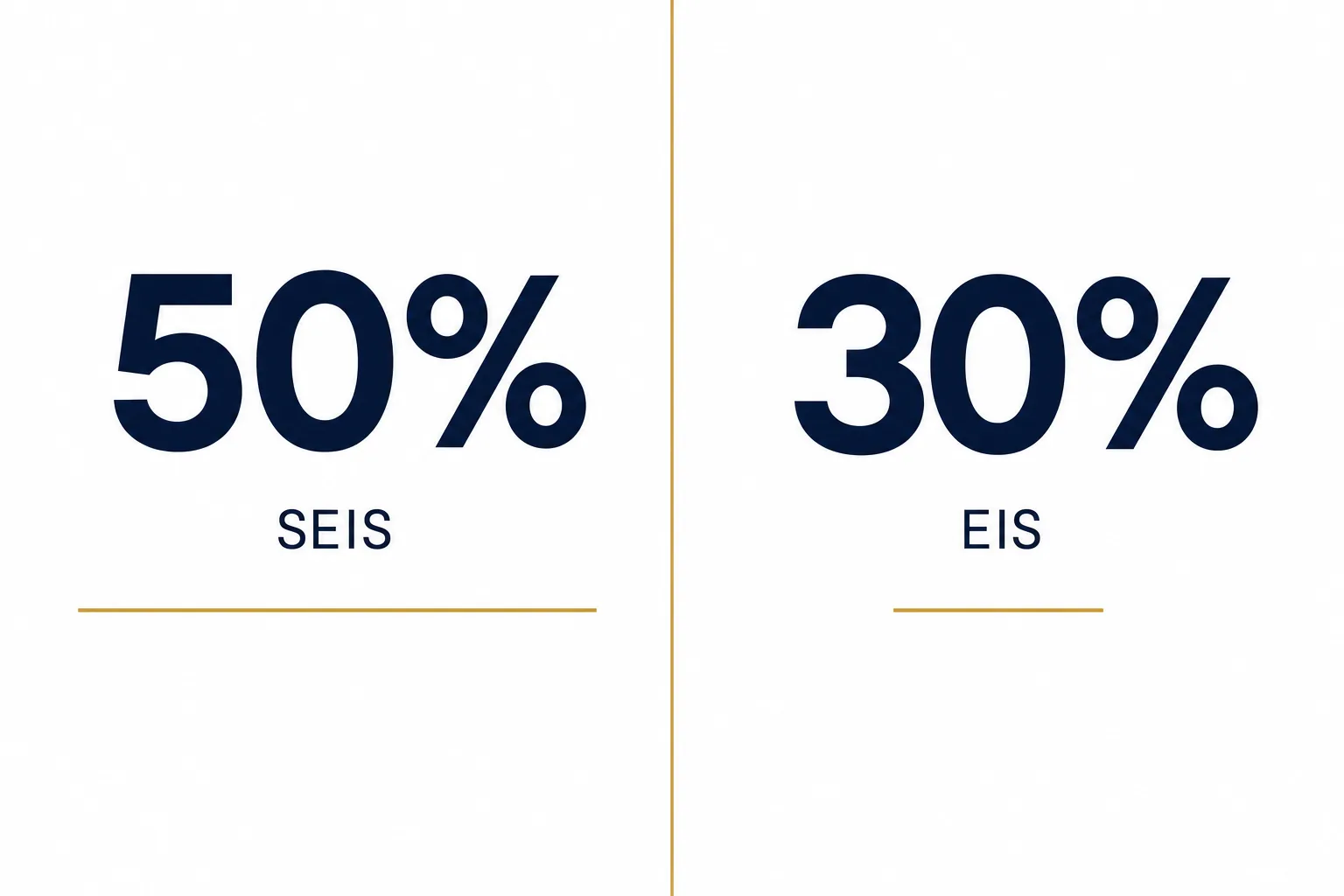
| SEIS | EIS | |
|---|---|---|
| Income tax relief | 50% of the amount subscribed | 30% of the amount subscribed |
| Investor annual limit | £200,000 | £1 million (£2 million including knowledge-intensive companies) |
| Company trading age | Under 3 years | Up to 7 years from first commercial sale (10 for knowledge-intensive) |
| Employees | Fewer than 25 | Fewer than 250 (500 for knowledge-intensive) |
| Gross assets | Up to £350,000 | Up to £30 million before share issue, £35 million after |
| Company raise cap | £250,000 lifetime | £10 million a year, £24 million lifetime |
| Minimum hold for CGT exemption | 3 years | 3 years |
Thresholds move at Budgets. Treat any table, including this one, as a starting point and check the current position on GOV.UK or with your accountant before you commit money or file a claim.
What SEIS is and who it is designed for
SEIS is for companies at or near their first commercial revenue: a small team, a short trading history, assets measured in tens of thousands rather than millions. The company must be UK-established, unquoted and carrying on a qualifying trade.
The generosity is deliberate. At seed stage there is no revenue trend to model and no comparable exit to point at. The 50% relief rate and the tight company caps are one policy decision seen from two ends: the state absorbs more of the downside exactly where the downside is most likely.
For investors, SEIS allocations are small by design. A £250,000 lifetime company cap spread across a syndicate produces cheques of a few thousand pounds, not six figures.
What EIS is and who it is designed for
EIS covers the next stage: still private, still unquoted, but with a trading record. A qualifying company must hold gross assets of no more than £15 million when the shares are issued and employ fewer than 250 full-time equivalent staff, rising to 500 for a knowledge-intensive company.
The knowledge-intensive route is the part most comparisons skip. Companies doing substantial research and development get a longer window from first commercial sale, a higher headcount limit and larger funding ceilings. For deep tech, life sciences and hardware, that is often the difference between the scheme working and not working at all.
Comparing the reliefs, one by one
Income tax relief gets the headline. Four other reliefs usually matter more to the outcome.
Income tax relief
SEIS gives 50% of the amount subscribed; EIS gives 30%. Under EIS, relief is capped at £1 million of subscriptions a year, or £2 million where the excess goes into knowledge-intensive companies. SEIS is capped at £200,000 a year.
Two practical points. Relief cannot exceed your income tax liability for the year, so a large subscription against a small tax bill wastes part of the benefit. And relief can be carried back to the previous tax year, subject to that year’s own limit, which is why timing a subscription around a bonus or a one-off income spike is worth planning.
Capital gains disposal relief
Under both schemes, gains on qualifying shares held for at least three years are free of Capital Gains Tax. This applies only where income tax relief was claimed and has not since been withdrawn. If the relief falls away, the exemption goes with it.
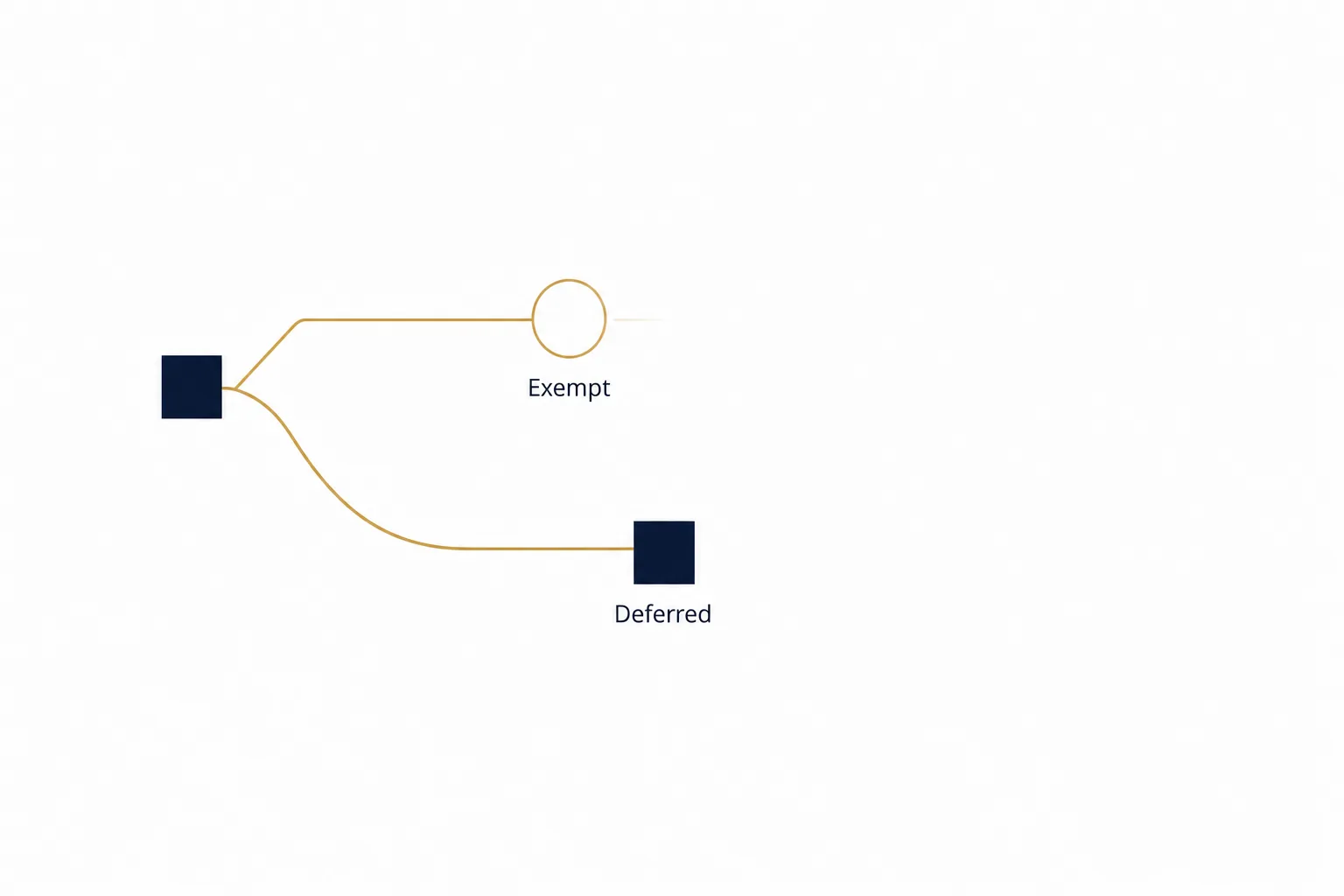
Reinvestment relief vs deferral relief
Here the schemes genuinely diverge. SEIS offers reinvestment relief: 50% of a capital gain reinvested into qualifying SEIS shares is exempted outright, up to the investor’s SEIS limit for that year.
EIS offers deferral relief: the gain is postponed, not cancelled, and comes back into charge when the EIS shares are sold.
One removes a tax liability. The other moves it. Anyone sitting on a large realised gain from a property or business sale should be clear which of the two they are buying.
Loss relief
This is the relief that changes behaviour. If qualifying shares are disposed of at a loss, the loss, net of income tax relief already claimed, can be set against income or against capital gains.
An illustration, using a 45% taxpayer and assuming the shares end up worthless. Put £10,000 into an EIS company: £3,000 comes back as income tax relief, leaving £7,000 at risk. Loss relief on that £7,000 at 45% returns about £3,150, so a total failure costs roughly £3,850. The same £10,000 into SEIS leaves £5,000 at risk after relief, and about £2,750 after loss relief.
That asymmetry is why experienced investors treat EIS and SEIS tax relief as portfolio tools. The arithmetic works across a spread of companies, not on a single conviction bet.
Inheritance tax and Business Relief
That relief has also just changed. From 6 April 2026, 100% Business Relief on qualifying unquoted shares is capped at £2.5 million per person, combined with agricultural property relief. Anything above that allowance is taxed at an effective 20% rate rather than passing free of inheritance tax.
Confirm the current position with a tax adviser rather than an article.
Which scheme fits your company
Work through it in order: trading age, gross assets, headcount, then the amount you need. Being under three years old with modest assets and raising a few hundred thousand points to SEIS. Past that, or raising seven figures, points to EIS.
Substantial R&D is worth testing against the knowledge-intensive rules, where companies can raise £10 million of EIS funding a year up to a £20 million lifetime limit, inclusive of money raised under other venture capital schemes.
Most companies use both, in sequence. Ordering matters: SEIS shares must be issued before any EIS shares from the same company. There’s no longer a requirement to spend the SEIS money first, that rule was repealed in 2015, though the belief that it still applies is a common and costly mistake in round structuring.
What SEIS does require, separately, is that 70% of the SEIS money (or four months of trading) has been reached before the company can submit its own SEIS compliance statement, the step that lets SEIS investors actually claim their relief. Getting the share-issue order wrong, including issuing SEIS and EIS shares on the same day, can invalidate the SEIS claim outright.
A SEIS application follows the same path as an EIS one: apply to HMRC for Advance Assurance before the raise, file a compliance statement once the trading conditions are met, then issue SEIS3 or EIS3 certificates so investors can claim. Check the excluded trades list and any disqualifying arrangements early. HMRC gives no guaranteed turnaround on Advance Assurance, so build slack into the timetable rather than assuming it clears before your runway does.
Which scheme fits you as an investor
Match the scheme to three things: your income tax liability for the year, your capital gains position, and your cheque size. SEIS suits smaller allocations across more companies. EIS suits larger commitments into businesses with something to show.
Relief can also be withdrawn. Being connected to the company, selling shares inside three years, receiving value from the company, or the company ceasing to qualify will each claw it back. The three-year clock runs from the share issue or the start of trade, whichever is later, which is not always the date on your bank statement.
What the comparison tables leave out
Qualifying status tells you nothing about company quality. HMRC is confirming that a company meets a set of size and trade tests, not that it is a good investment. Plenty of SEIS-qualifying companies are poor businesses.
The constraints that decide outcomes sit elsewhere. There is no secondary market, so an exit depends on a trade sale or a later round buying you out. Your stake dilutes with every subsequent raise. And you cannot claim relief until the company issues your certificate, which routinely lags the investment by months.
For most people the bottleneck is not tax treatment. It is access. Plenty of people researching how to invest in private equity in the UK meet SEIS and EIS long before they meet a single credible deal, or find enough information to judge one.
How Beaufort Society members approach SEIS and EIS deals
Beaufort Society is a private equity firm with a club attached, and the club is free to join. We introduce members to private companies raising capital, explain how each raise is structured, and leave the decision where it belongs.
On the model, plainly: we are paid an introducer fee by the company raising the funds, not by members. Read every opportunity with that in mind. We would rather say it than bury it.
What members tell us they value is the intimacy of the club and the fact that nobody is selling. Every investor is treated as the only investor. The deals we bring are not the ones already circulating on open angel platforms, and tax relief is treated as a feature of a deal, never the reason for one.
Related readingHow to Invest in Unlisted Companies in the UKRead the guide →A 50% relief rate on a business that will not survive contact with its market is still a loss.
Access depends on qualifying as a high net worth or self-certified sophisticated investor, which governs what we are permitted to show you. Membership is worldwide, though the relief itself depends on having a UK income tax liability.
SEIS vs EIS: frequently asked questions
Frequently asked questions
Can a company use both SEIS and EIS?
Can an investor claim both in the same tax year?
Is SEIS always better for investors?
What happens if the company fails?
Do overseas investors qualify?
How long does Advance Assurance take?
Does the three-year hold run from my investment date?
Key takeaways
SEIS and EIS are staged tools for different company maturities, not competing options. For founders, the question is stage fit. For investors, it is portfolio fit: enough positions that loss relief and one good exit can do their work.
Tax relief changes the risk profile of an investment. It does not change the business.
This article is general information, not tax or investment advice. Investing in private companies puts your capital at risk, these shares are illiquid, and tax treatment depends on individual circumstances and can change. Take professional advice before acting.